HYDRO GEO ENVIRONMENTAL CONSULTING

HGEC is an Australian consultancy who delivers technical expertise in groundwater engineering, hydrogeology and groundwater modelling

About Us

HGEC — A Legacy of Excellence Since 2002


Hydro Geo Environmental Consulting is a scientific consultancy based in Victoria. HGEC provide analytical services and technical advice to a wide range of sectors. Our clients include private, commercial, industrial and government, interested in a variety of activities including research, specialised monitoring and sampling, asset management, risk assessment, groundwater supply, groundwater licensing, groundwater impact assessment, groundwater pumping tests, groundwater sampling, or geoscience audits.

Our technical backgrounds include geology, hydrogeology, engineering, groundwater modelling, GIS analysis and community consultation. We have over 30 years industry experience including working within government and consulting.

We can also bring soil, ecology, geotechnical engineering, agricultural, geospatial data analysisand community consultation services to projects through working relationships we have developed with other specialist independent consultants.
Our Services

4
Hydrogeological Investigations​

Experience & Capability

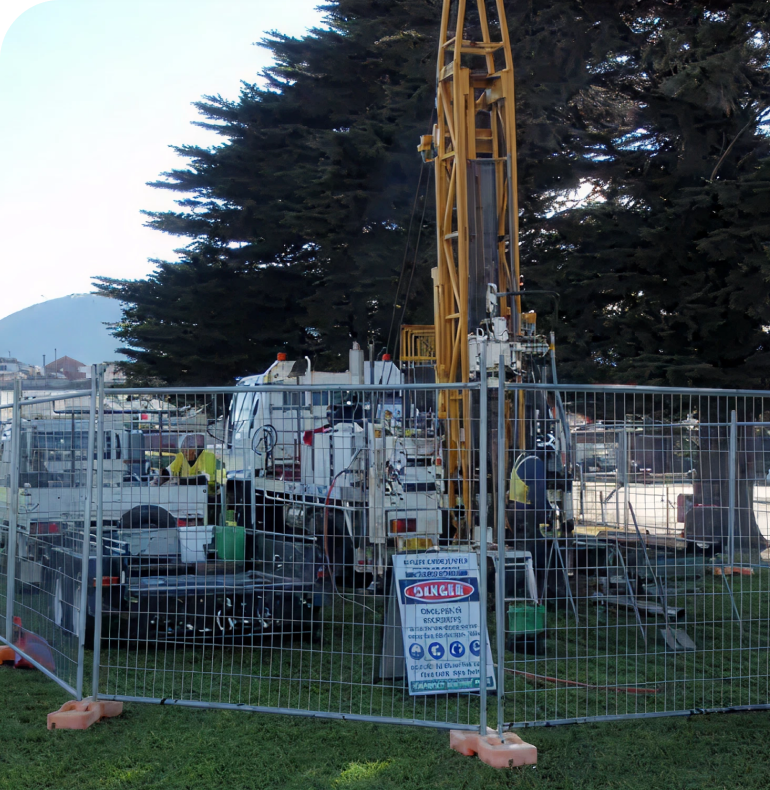
We design and deliver fit-for-purpose hydrogeological investigations that stand up to technical and regulatory scrutiny. Our work spans desktop assessments, targeted drilling, hydraulic testing, aquifer pumping tests, monitoring and sampling, with clear, decision-ready reporting for development, infrastructure, mining and environmental projects.​

Request a Consultation

What we do

We characterise hydrostratigraphy, quantify groundwater volumes and movement, and translate measurements into practical information.

How we work

Programs are planned to answer specific decisions—minimising footprint while maximising confidence

Expert Witness Support

HGEC provides independent technical audits and expert evidence for planning, environmental and civil matters before Victorian Civil and Administrative Tribunal (VCAT), TasCAT and the NSW Civil and Administrative Tribunal (NCAT). Our experts act under the relevant Expert Witness Codes, with opinions that are impartial and transparent​

Request a Consultation

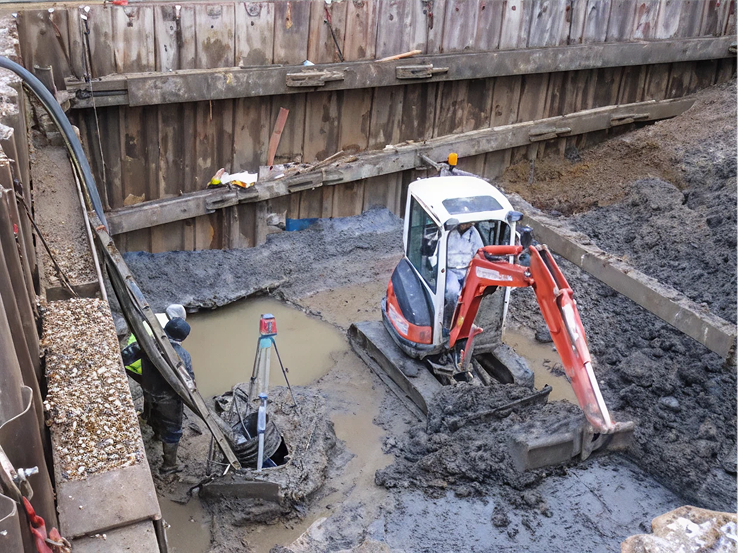
Basement Dewatering & Design

HGEC specialises in defining cost-effective Design Groundwater Levels (DGLs) for basements from excavation through operation. We apply a standardised, risk-based procedure to define both Construction DGLs (temporary excavation conditions) and Operational DGLs (long-term conditions), consistent with relevant Australian building and engineering requirements and project design criteria, and supported by defensible hydrogeological analysis.
Request a Consultation

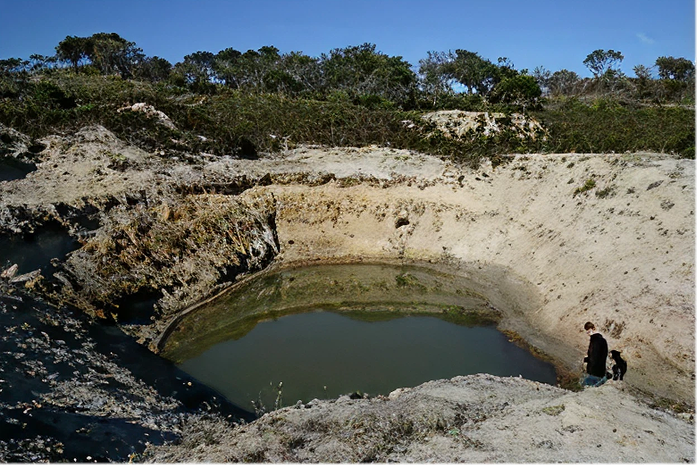
Groundwater Investigations

We deliver fit-for-purpose groundwater investigations that define baseline conditions, quantify risk and provide defensible inputs to design and approvals. Our investigations are scoped to the project stage and focused on clear, decision-ready outputs.

Request a Consultation

What we do

  • Establish the hydrogeological setting (hydrostratigraphy, recharge/discharge pathways).
  • Identify receptors (springs, streams, neighbouring users, groundwater-dependent ecosystems).
  • Quantify preliminary inflow and seepage ranges, including seasonal variability, to inform design and staging.
  • Develop and refine conceptual site models aligned to approval requirements.
  • Design baseline monitoring networks (levels and quality) and reporting programs.
  • Scope practical dewatering concepts (e.g., perimeter abstraction, sump/drainage strategies) where required.

Typical deliverables

  • Investigation design and field program QA/QC.
  • Bore construction and as-built details.
  • Validated groundwater level and quality datasets.
  • Hydraulic parameter estimates (e.g., hydraulic conductivity, storativity).
  • Regulator-ready technical reporting with recommendations, triggers and management actions.
Groundwater Modelling

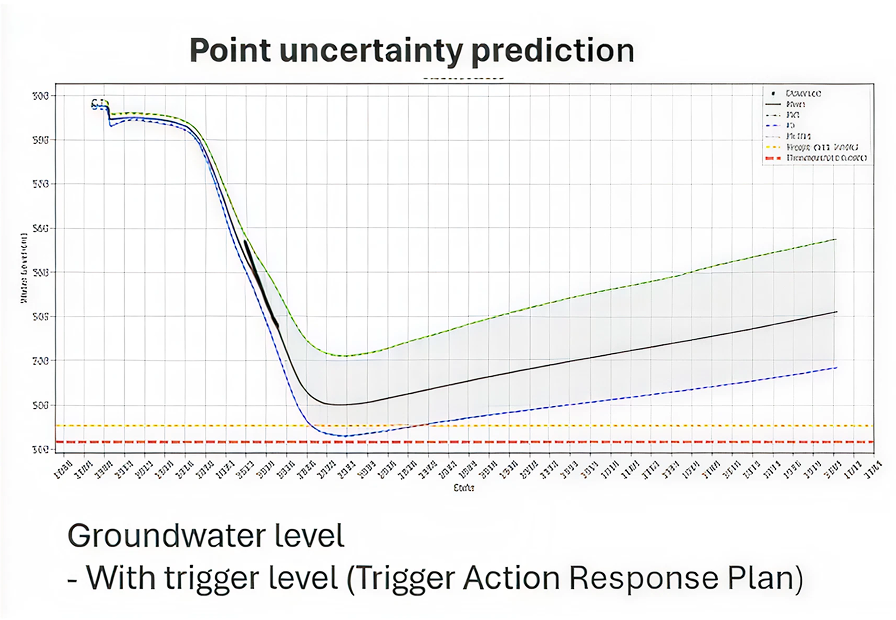
HGEC delivers defensible groundwater models from feasibility through approvals and detailed design. Our practice follows the core principles of the Australian Groundwater Modelling Guidelines robust conceptualisation, disciplined calibration, and transparent uncertainty so decision-makers can act with confidence.
Request a Consultation

What we model

  • Regional and local groundwater flow systems (unconfined and confined aquifers, multi-layer settings).
  • Surface water–groundwater interactions (rivers, drains, wetlands; baseflow and seepage).
  • Construction and operational scenarios for excavations and basements (drawdown, inflow, recovery).
  • Dewatering systems (wellfields, cutoff walls, drains/sumps) and optimisation of pumping rates.
  • Contaminant transport where required (plume migration and time-to-boundary style assessments).

How we work (technical approach)

  • Build a defensible conceptual model (hydrostratigraphy, boundaries, stresses, recharge, hydraulic properties).
  • Calibrate to water levels and flows, with clear calibration targets and error metrics.
  • Run scenario and sensitivity testing to quantify uncertainty and separate “what we know” from “what drives risk”.
  • Provide model QA/QC, including reproducible inputs, version control, and transparent assumptions.

Examples of modelling applications

  • Basement projects: predict excavation inflows, assess drawdown impacts to neighbouring assets, and support construction vs operational groundwater levels.
  • Mining and quarries: estimate pit inflows, compare dewatering options, and assess recovery after cessation.
  • Infrastructure corridors: evaluate cumulative drawdown and potential impacts to waterways and receptors along alignments.
  • Approvals support: produce model outputs that map drawdown extent, flux changes, and compliance with trigger criteria.

Typical deliverables

  • Conceptual model summary and model build report.
  • Calibration results, sensitivity/uncertainty summary, and scenario outcomes.
  • Drawdown/inflow predictions, water balances, capture zones (where relevant), and impact maps.
  • Regulator-ready documentation aligned to AGMG expectations
Groundwater Sampling

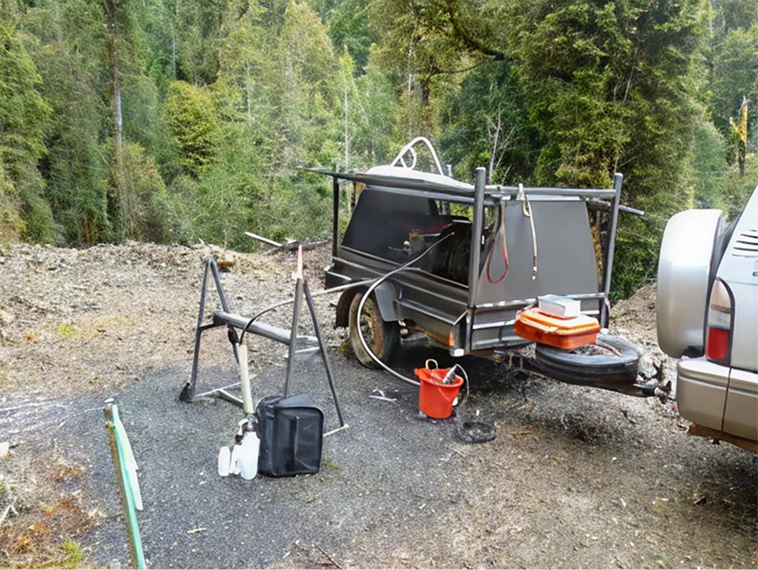
HGEC undertakes groundwater sampling programs to generate high-quality, defensible data for baseline assessment, approvals, compliance monitoring and impact assessment. We design fit-for-purpose sampling plans and apply appropriate field QA/QC so results are reliable and comparable over time. We use a variety of groundwater sampling methods and techniques, including low-flow sampling, and have successfully sampled groundwater at depths of up to 1,100 m.

Sampling design aligned to project objectives (baseline, compliance, investigation, post-construction monitoring).

Purging and sampling methods suited to bore construction and aquifer conditions (including low-flow where appropriate).

Field measurements recorded consistently (e.g., pH, EC, DO, ORP, temperature, turbidity) to confirm stabilisation and sample quality.

Laboratory coordination including bottles, preservatives, holding times and chain-of-custody management.

QA/QC implementation (field duplicates, blanks and data validation) with clear reporting of limitations and confidence.

Interpretation that links results to hydrogeology (hydrochemical trends, potential sources, and implications for receptors and management actions).
Request a Consultation

Hydraulic Parameterisation (Packet Testing, Constant Head Permeameter & Rising/Falling Head Tests)
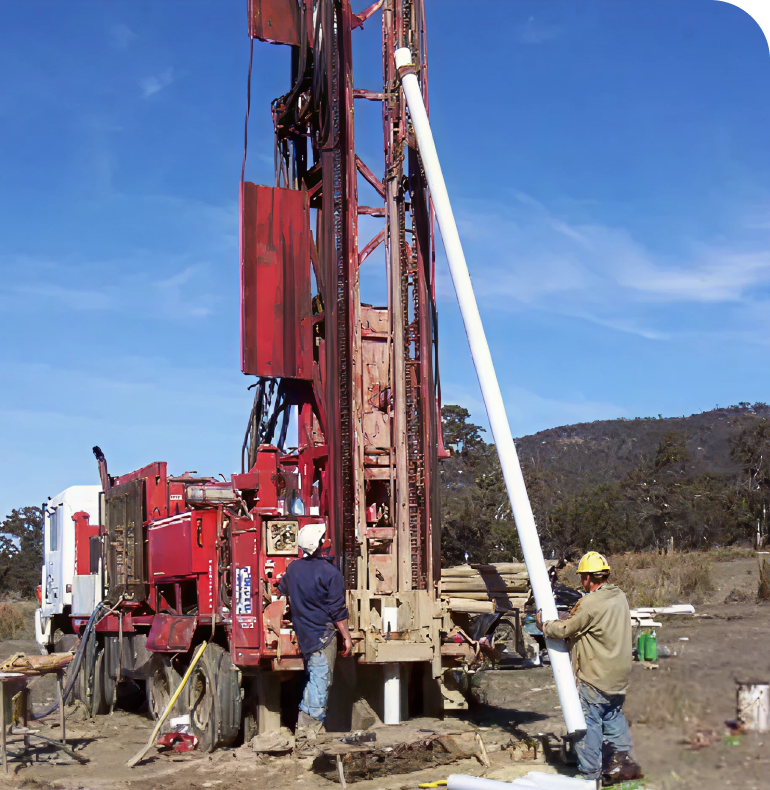
HGEC quantifies hydraulic properties to support dewatering design, groundwater modelling, impact assessment and approvals. We select methods to suit bore construction, depth, permeability and project objectives, and deliver results in design-ready formats.

Packer testing (single & double packer): Isolates discrete intervals in open hole or cased bores to characterise vertical variability in hydraulic conductivity. Includes staged pressure/flow testing, stabilisation and recovery checks, and interval-specific K/T interpretation.

Slug testing (rising & falling head): Rapid field testing in monitoring bores using solid slugs or pneumatic (air) methods, with high-resolution water level logging to derive hydraulic conductivity and representative ranges.

Constant head permeameter: Applied where bore conditions allow, particularly in higher-permeability settings, to provide an additional line of evidence for hydraulic conductivity.

Defensible outputs: Interval-by-interval results, representative values and uncertainty ranges, tied back to hydrostratigraphy and the conceptual site model for use in design calculations and numerical models.
Request a Consultation

5

Have a question?

Connect with our specialists to design the right investigation approach for your site.

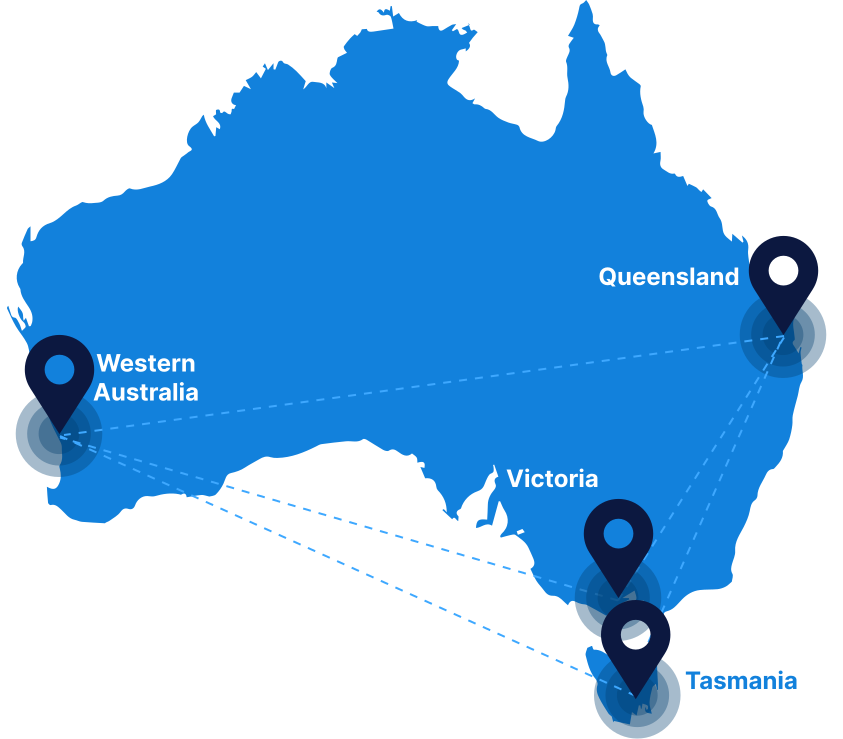
Working nationwide across Australia

Our nationwide team combines a broad national outlook with deep local insight.